
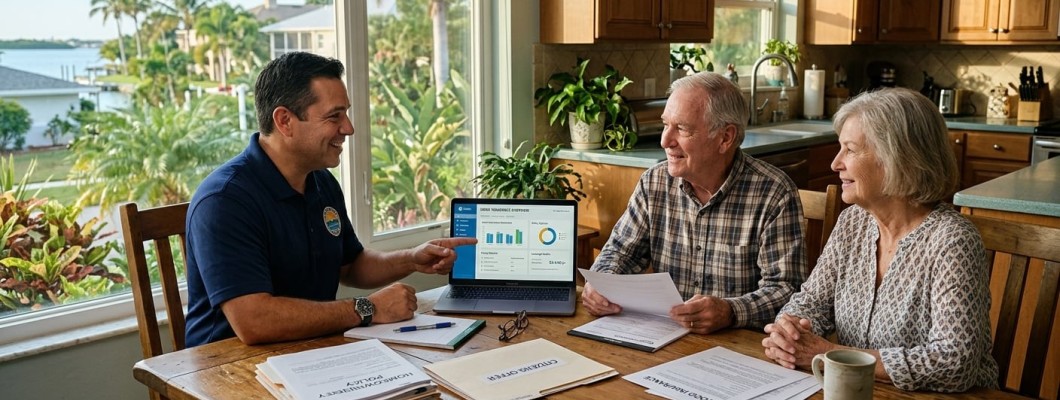
Florida insurance market trends: what Florida agents need to know
Florida insurance market trends describe how pricing, coverage availability, carrier participation, and regulation are changing across property, auto, and other lines in the state, and how those changes affect agents and consumers. The market is moving from years of crisis toward cautious stabilization, but affordability and complexity remain major concerns for Florida households and businesses.
If you live or work in Florida, you don’t need a headline to tell you the insurance market is challenging. From rising home insurance rates in recent years to new laws and shifting carrier appetites, the landscape is changing quickly. For current and aspiring Florida insurance agents, these trends aren’t just news stories—they shape your career, your day-to-day conversations with clients, and the opportunities in front of you.
This guide breaks down the big-picture market changes in clear, non-technical language and, more importantly, explains what they mean for:
- Licensed Florida agents (captive and independent)
- People considering a Florida insurance career
- Agents planning their Florida insurance pre-licensing or continuing education (CE)
Throughout, you’ll find links to relevant Florida insurance pre-licensing and CE courses from OnLine Training, Inc. (OLT) to help you stay compliant and competitive.
Explore Florida insurance pre-licensing courses
Browse Florida insurance CE courses
How is today’s Florida insurance market changing overall?
Florida remains one of the most complex insurance markets in the country. A few themes define the 2024–2026 environment: heavy catastrophe exposure, a property market coming off a crisis, aggressive legislative reforms, shifting carrier participation, and growing consumer demand for clear guidance.
- Catastrophe risk: Hurricanes and severe storms still drive major property losses, though recent seasons have not erased long-term risk.
- Reforms and stabilization: Laws in 2022–2025 targeted litigation abuse, assignment of benefits (AOB), and reinsurance volatility, helping slow rate increases and attract more carriers.
- New carriers entering: Since these reforms, state regulators report more than a dozen new companies doing business in Florida, signaling improved confidence in the market.
- Citizens shrinking: Citizens Property Insurance Corporation’s policy count has fallen from a peak over 1.4 million in 2023 to under 800,000 by mid‑2025 as private carriers take out policies.
- Consumer confusion: Many customers are unsure why rates are still high, why they’re being moved out of Citizens, or why certain homes are harder to insure, which increases the need for well-trained agents.
For agents and future agents, this means you’re working in a high-need, high-scrutiny environment. Clients are motivated to understand their coverage and have more options in some segments, while regulators and carriers expect you to be current on Florida-specific rules.
What is happening in Florida property insurance?
No conversation about Florida insurance market trends is complete without property insurance. After years of double-digit rate hikes and insurer withdrawals, the market is showing early signs of moving from crisis to cautious recovery.
How do hurricanes and catastrophe risk affect coverage?
Florida’s geography guarantees that hurricanes, tropical storms, and severe convective storms will remain central concerns. Carriers continue to manage their coastal and high‑risk exposures carefully, and many adjust underwriting guidelines after active storm seasons.
In practice, agents see:
- Higher deductibles and stricter roof requirements, especially in coastal counties.
- Limited options for older homes or properties in the highest‑risk areas.
- More emphasis on mitigation credits (wind mitigation inspections, roof upgrades, shutters) to help control risk and, in some cases, premiums.
Agents often need to explain why a client’s rate is increasing even without a claim, or why a specific roof type or age is causing placement challenges. Clear, plain‑language explanations build trust and reduce frustration.
How are litigation reforms affecting the market?
Florida historically had an outsized share of property-related litigation and AOB abuse compared with other states. Recent reforms—including Senate Bill 2‑A and follow‑up legislation—banned AOB on new policies, eliminated one-way attorney fees, shortened claim deadlines, and created new reinsurance support programs for carriers.
Results so far include:
- Sharp drops in property insurance litigation filings.
- More carriers able to hold rates flat or even request reductions instead of large increases by 2025–2026.
- Regulators reporting millions of homeowners seeing either a rate decrease or no increase at renewal, something rare in earlier years.
For agents, the key is understanding how policy language and claim procedures have evolved, while avoiding legal advice. A strong Florida property insurance CE course can help you translate legal changes into practical client guidance without crossing into practicing law.
View Florida Property & Casualty CE courses
How are carrier appetites and participation shifting?
Between 2017 and 2023, multiple Florida property insurers withdrew or became insolvent, contributing to a surge in policies at Citizens and fewer options for consumers. Since 2024, however, improved regulation and reinsurance conditions have encouraged more private insurers to enter or expand in the state.
Recent trends include:
- At least 14 new companies writing business in Florida following reforms, according to state officials.
- Accelerating depopulation of Citizens as private insurers assume hundreds of thousands of policies.
- More competitive filings, with dozens of property insurers requesting rate decreases or no increases for segments of their book.
For independent agents, appointment strategy is more important than ever. Contracting with multiple stable carriers gives you more options when one carrier tightens guidelines or changes appetite. Good documentation and strict adherence to carrier underwriting rules help reduce E&O risk.
What are the current Citizens Property Insurance trends?
Citizens Property Insurance Corporation, Florida’s state-backed insurer of last resort, is a key indicator of the broader market. After peaking at just over 1.4 million policies in late 2023, Citizens’ policy count dropped below 1 million in 2024 and continued falling to around 777,000 policies by mid‑2025 as private insurers took over more risks.
Key developments include:
- A 43% reduction in Citizens’ total exposure over a recent 12‑month period, reflecting heavy depopulation activity.
- Stricter eligibility rules and flood insurance requirements for Citizens policyholders, designed to keep Citizens a true last resort rather than a long‑term solution.
- Premium adjustments, with some policyholders seeing smaller increases or even decreases as the market stabilizes.
Agents must understand when a client qualifies for Citizens, when a private-market offer triggers a required move, and how take‑out offers work. Setting expectations early helps clients avoid surprises when they receive letters about being moved from Citizens to a private carrier.
Are Florida home insurance rates finally easing?
Florida homeowners saw years of steep premium growth due to storms, litigation, and reinsurance costs. In 2024–2026, the trend is shifting from rapid increases toward stabilization and, in some cases, modest declines, although rates remain high by national standards.
Recent data show:
- Average Coverage A premiums in Florida’s largest counties remained flat or declined across many tiers from 2024 to 2025.
- More insurers holding rates steady or filing for decreases as their loss experience improves and reinsurance becomes somewhat less costly.
- State-required premium deductions on certain homeowners and flood policies starting in 2025, lowering costs for many consumers compared with prior years.
Clients may still feel blindsided by renewal changes, especially if they compare to pre‑crisis years. Your ability to explain the bigger picture—storms, lawsuits, reinsurance, and reforms—can turn frustration into informed decisions.
What are the key Florida property market indicators for 2024–2026?
| Indicator | Recent status | What it means for agents |
|---|---|---|
| Citizens policy count | Peaked >1.4M in 2023, fell below 1M in 2024, around 777K by mid‑2025 as depopulation accelerated. | More private options, more take‑out notices to explain, and a need to manage transitions carefully. |
| Property litigation | Significant decline after reforms banning AOB on new policies and eliminating one‑way attorney fees. | Less volatility in rates over time, but new claim rules to understand and communicate in simple terms. |
| Homeowners premium trend | From sharp increases to more flat or modest changes; some insurers filing for decreases in 2025–2026. | Opportunity to revisit accounts, shop options, and highlight mitigation credits and policy improvements. |
| Carrier participation | At least 14 new companies added to the market after reforms, plus existing carriers expanding cautiously. | More appointments to consider, more varied appetites, and a need for ongoing product and underwriting training. |
How is Florida auto insurance changing for 2026?
While property has captured most headlines, Florida’s auto insurance market is also seeing meaningful shifts. Legislative reforms aimed at fraud and legal abuse are contributing to sustained rate reductions among major auto carriers.
Florida’s insurance regulator reports that the top five auto insurance groups—Progressive, GEICO, State Farm, Allstate, and USAA—requested a combined rate change of about −7.4% for 2025 and are indicating an average −8% rate change for 2026. State leaders highlight that nearly 80% of Florida auto policyholders are expected to see lower rates based on these filings.
For agents, this opens the door to proactive outreach. Auto policy reviews can be a natural entry point to discuss bundling with homeowners, flood, or umbrella coverage as those markets stabilize.
Start a Florida Personal Lines pre-licensing course
How do property and auto trends compare for Florida agents?
| Line of business | Trend 2024–2026 | Agent opportunity |
|---|---|---|
| Homeowners / Property | From crisis to cautious stabilization; Citizens shrinking, more carriers entering, rates still high but moderating. | Educate clients on reforms, mitigation, and carrier options; reposition risks as new markets open. |
| Auto | Major insurers filing for rate decreases; average indicated −8% change for 2026 among top five groups. | Contact existing clients with good news, explore multi‑policy discounts, and cross‑sell additional coverages. |
What do these trends mean for Florida insurance careers?
Market volatility has not reduced demand for licensed agents. In fact, as Florida’s market becomes more technical and more regulated, the need for knowledgeable, ethical professionals grows. Consumers want someone who can translate complex changes into clear options.
If you are considering a Florida insurance career, current trends mean:
- Strong ongoing demand in property and personal lines, especially in growth regions and coastal areas.
- More opportunity to differentiate yourself by specializing in Florida-specific issues like Citizens eligibility, flood, and hurricane mitigation.
- Greater emphasis from employers on compliance, documentation, and continuing education as regulations evolve.
Learn more about starting a Florida insurance career
Why are Florida insurance pre-licensing and CE more important than ever?
With Florida’s fast‑changing market, simply “having a license” is not enough. You need solid pre‑licensing training to pass the state exam and a structured CE plan to stay ahead of legislative, product, and carrier changes.
High‑quality Florida insurance education helps you:
- Understand state‑specific laws around property, flood, Citizens, and claims without giving legal advice.
- Spot coverage gaps and explain options to clients in plain language, improving client retention.
- Stay compliant with DFS requirements and maintain good standing with carriers and agencies.
OLT offers Florida‑approved pre‑licensing and CE courses that are online, self‑paced, and designed for busy adults. Our courses focus on real‑world scenarios Florida agents face every day.
Which Florida insurance courses should agents consider?
| Situation | Recommended course type | Example OLT course |
|---|---|---|
| New to the industry, want to sell home, auto, and other personal lines | Florida 2‑20 General Lines or 20‑44 Personal Lines pre‑licensing | Florida 2‑20 General Lines Pre‑Licensing |
| Already licensed, focusing on property and Citizens business | Property & Casualty / homeowners‑focused CE | Florida Property & Casualty CE Package |
| Personal lines agent expanding into flood and catastrophe risk discussions | Flood insurance and catastrophe risk CE | Florida Flood Insurance CE Course |
| Agency leader training new staff on ethics and compliance | Florida ethics and law update CE | Florida Insurance Ethics CE |
How can Florida agents talk to clients about rates and coverage now?
As the market shifts from crisis toward recovery, your communication skills are just as important as your technical knowledge. Many clients still only see the bottom line: “My rate is high.” Your job is to put that number into context and offer realistic options.
Practical steps include:
- Reviewing current declarations in advance so you can explain changes in coverage, limits, and deductibles.
- Preparing a simple explanation of recent Florida reforms and how they are slowly stabilizing the market, even if premiums are still elevated.
- Highlighting mitigation opportunities and credits that may help over time, such as roof upgrades or wind‑mitigation improvements.
- Using auto rate relief as a positive talking point and a way to offset overall household insurance costs.
Role‑play, scripting, and scenario‑based CE courses can help you practice these conversations so you feel confident in front of clients.
Customer Service Skills for Insurance Agents course
FAQs: Florida insurance market trends for agents
Are Florida home insurance rates going down?
Rates are not broadly “cheap,” but the trend has shifted from large annual increases to more stable or modest changes, with some insurers now filing for decreases in certain areas. Many homeowners still pay more than in other states, but stabilization is a positive sign.
Is Citizens Property Insurance going away?
Citizens is not going away, but state leaders are actively shrinking its role. Policy counts and total exposure have dropped significantly as private insurers assume more policies through depopulation programs. Citizens remains a safety net, not a preferred long‑term option.
Is now a good time to become a Florida insurance agent?
Yes. Demand for knowledgeable agents remains strong, and the complexity of Florida’s market makes trusted advisors more valuable, not less. If you complete strong pre‑licensing education and commit to ongoing CE, you can build a resilient career.
Which license should I get first in Florida?
Most new agents start with either the 2‑20 General Lines license (for full property and casualty) or the 20‑44 Personal Lines license, depending on their role and agency needs. Reviewing job postings and speaking with prospective employers can help you choose.
How often do Florida insurance laws change?
In recent years, Florida has passed major insurance legislation almost annually, especially around property and litigation. That pace makes high‑quality CE essential if you want to stay compliant and credible with clients.
Get started with Florida pre‑licensing | Stay current with Florida CE
Sources